
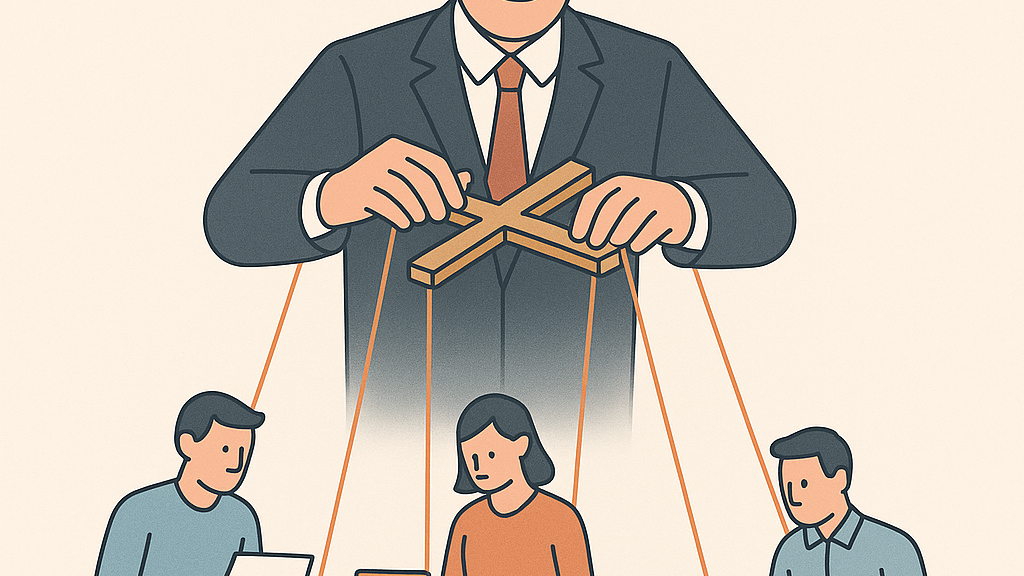
Many organisations fall into a false belief of control by assigning work during various planning horizons. Is that something which helps in progressing work forward ? Lets examine through operational science (Queuing theory) first to see the cause and effect.
Rigid assignment often creates a system where work is directed toward a specific individual or person, leading to a structure featuring one queue per server. This structure is unfortunately very common in product development processes. Queuing theory demonstrates that these isolated queues are inefficient. When processes maintain separate queues, a single slow or blocking job on one server can result in severe delay for those waiting in that queue, even if other resources are available. Lets see an example:

Now lets see what happens in a messy situation Ticket T1 (Payment) turns out to be time taking lets pretend, tied to compliance changes and third-party issues. It sits with Alice for six days. That creates a queue behind her. T2 and T5 wait idle, even though Bob and Cara are free So your cycle time now is :
Actual work time : x days
Wait time : 6 days
Total : x + 6 days
Do you notice what just happened with rigid assignments. In contrast, an optimal system utilizes a single shared queue for multiple servers. The mathematical consequence is when everyone shares one queue instead of having separate lines, the waiting time for each person becomes more predictable. There are fewer long delays because the work can go to whoever is free next. That means everyone gets served faster and with less frustrationof using a shared queue structure is that the variance in processing times is lower, and thus, all customers experience a smaller delay.
Second aspect of this the cultural damage that it does. When developers finish something and then watch it sit in a queue for days or weeks, urgency dies. They stop rushing, not because they’re lazy, but because the system shows them that speed doesn’t change anything. If the impact of their work is delayed, their sense of competence is delayed with it. They start to ask themselves why they should bother pushing. Rigid assignment also breaks the idea of teamwork. Real teams either seek help or provide help, and reallocate their strength when things change. If that isn’t happening, the system is working against the humans, not for them. It also locks people into narrow identities. You become “the payment person” or “the UI person.” That might feel flattering for a year, but over time it becomes a box. Humans need growth to stay engaged. Ikigai the idea of finding the intersection between what you’re good at, what you can get better at, what feels meaningful, and what the world needs can’t exist if the work system doesn’t allow you to stretch.
And this goes directly against Self Determination Theory. People stay motivated when they have autonomy over their work, when they feel themselves developing mastery, and when they feel connected to others through shared effort. Rigid queues cut into all three. You take the work you’re handed, you repeat what you already know, and you rarely collaborate unless something is on fire. What this really means is rigid assignment don’t just slow delivery they shrink people
Ref: The Principles of Product Development Flow, Don Reinerstsen